Most new year resolutions fail because they are not aligned with who we truly are.
Intrinsic motivation and understanding your prakriti can help you set goals that last.
We are human — biologically and psychologically unique.
Yet, we model others constantly. Sometimes consciously, often without realising it. Ironically, we don’t like being told that we are copying someone.
Still, every January, thousands of us start the same routines — new diets, gym memberships, digital detoxes — because we saw others doing it. Social media makes it look cool, inspiring and easy.
Modelling is not the enemy here. Rather, it is what and how we are modelling.
The problem begins when we follow patterns that don’t suit us.
The “New Year, New Me” Phase

New Year’s week feels powerful.
You imagine a healthier, stronger, more disciplined version of yourself. The motivation feels real.
But motivation is often misunderstood and to an extent, misused as well.
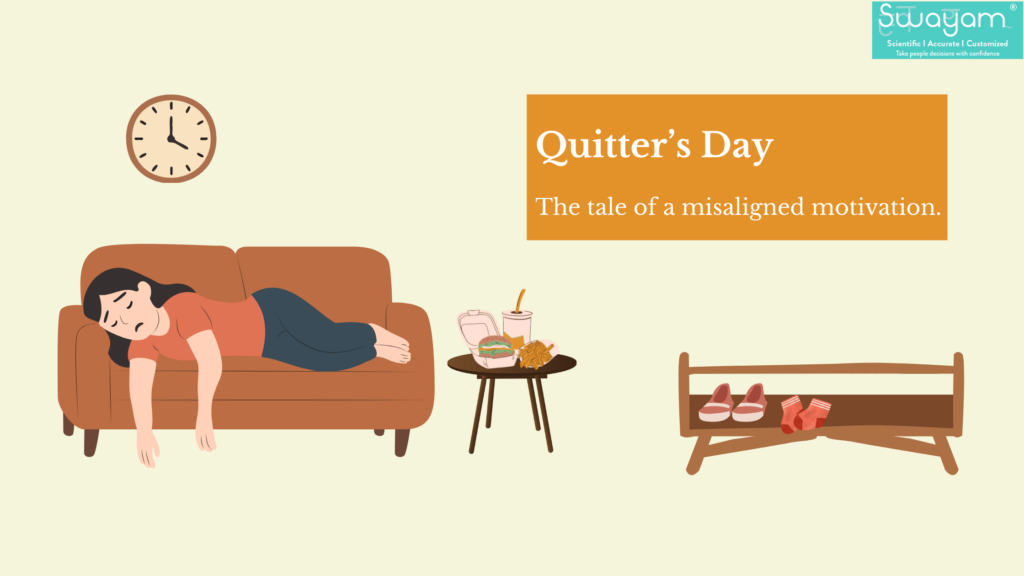
And yet, by the second Friday of January — popularly known as Quitter’s Day — most resolutions are quietly abandoned.
Motivation: What Really Moves You?
Intrinsic motivation is the drive that comes from within — when you do something because it gives you joy, meaning or satisfaction. It does not depend on praise, punishment or social validation.
This is the kind of motivation that sustains behaviour over time. If your resolution is powered mainly by external pressure — trends, social media, or what others are doing — it is unlikely to last.
This is not laziness. It is misaligned motivation.
Also read about procrastination here
Only intrinsic motivation survives after the excitement fades.
If your resolution was born out of comparison, social pressure or a sudden burst of enthusiasm, it was never meant to last.
Your Body Already Knows This
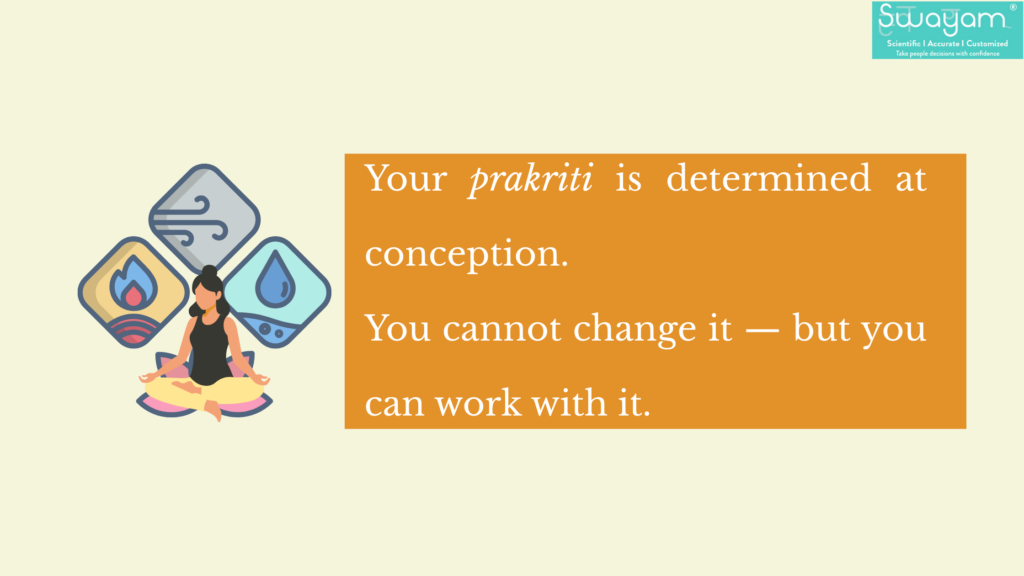
Ayurveda speaks about prakriti — your inborn mind–body constitution, shaped by Vata, Pitta and Kapha.
- Vata-dominant individuals tend to be impulsive, energetic and easily influenced. They leap into action without much thought — and lose momentum just as quickly.
- Pitta-dominant individuals think and make fast decisions. They try to stick to it as much as possible, however, if the going gets tough, they might abandon it midway.
- Kapha-dominant individuals take a long time to make decisions but once they decide they stick through to it come what may. Getting them to overcome their dislike of physical discomfort is very difficult.
Your prakriti is determined at conception. You cannot change it — but you can work with it.
When resolutions are not aligned with who you are, they drain your intrinsic motivation. External energy can ignite action, but it cannot fuel it forever.
Let’s Talk Solutions
1. Accept the setback
No guilt. No self-criticism. A setback is information, not failure.
2. Revisit your resolution
Ask yourself honestly:
- Did I set the bar too high?
- Did I expect myself to maintain an intensity that isn’t sustainable for me?
Most resolutions sound like this:
“I will eat healthier.”
“I will exercise regularly.”
“I will quit this habit.”
These are intentions, not plans.
Ambiguity gives the mind permission to negotiate, bend rules and eventually abandon the goal.
Make it concrete:
- “I will replace one snack with a fruit or vegetable every day.”
- “I will do 5 squats after my morning coffee.”
- “When I feel the urge to engage in my addiction, I will speak to someone instead.”
Small, precise actions create psychological safety and momentum.
3. Find your people
Surround yourself with like-minded individuals who are working on their own goals. Share your progress daily — not for praise, but for accountability and connection.
Bottom line
Know who you are.
When you align your goals with your mind, body and inner nature — instead of chasing what everyone else is doing — motivation becomes intrinsic, not forced.
Work with your prakriti, not against it. That is how resolutions stop being seasonal promises and start becoming sustainable change.